
Contract Administration
General Approach
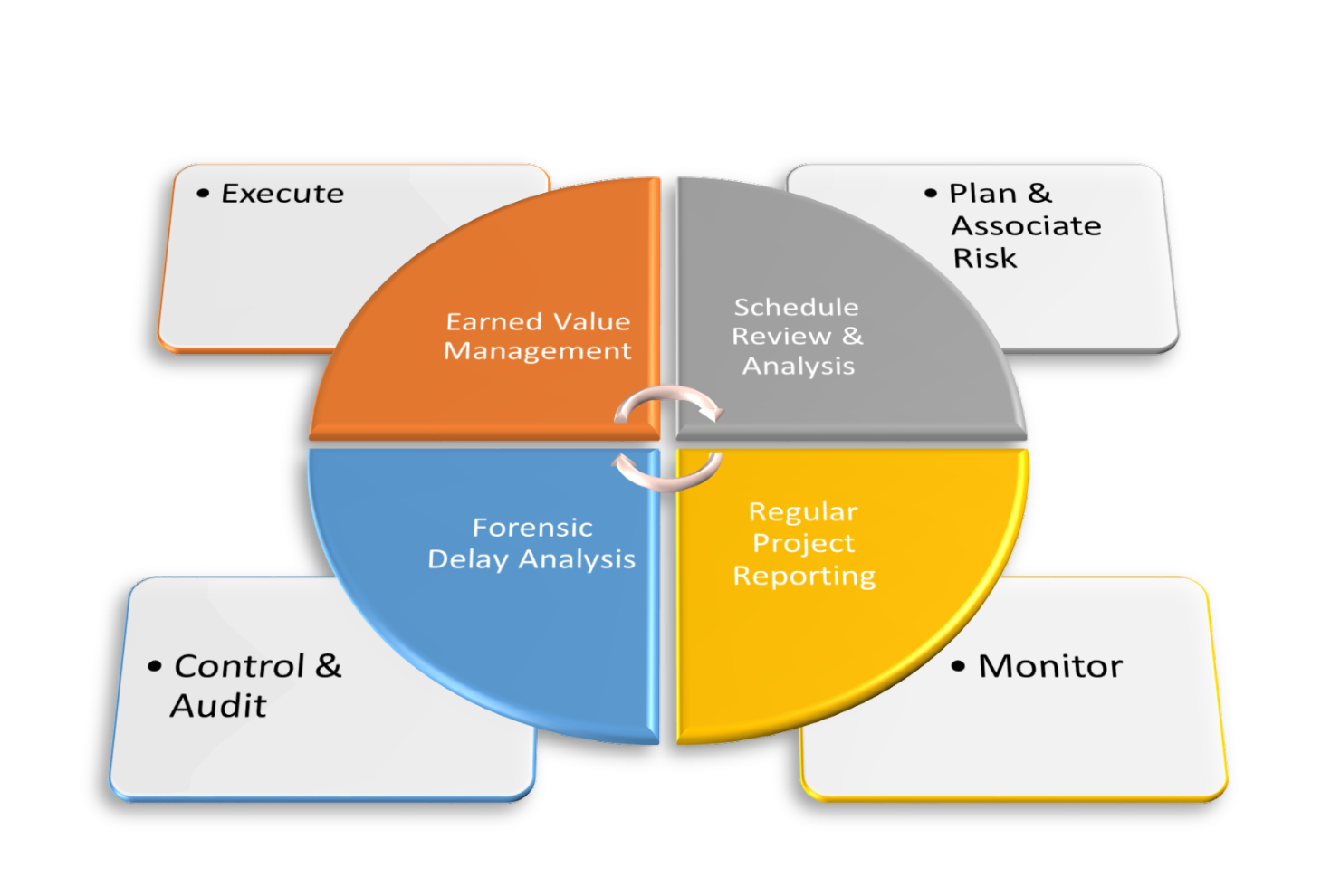
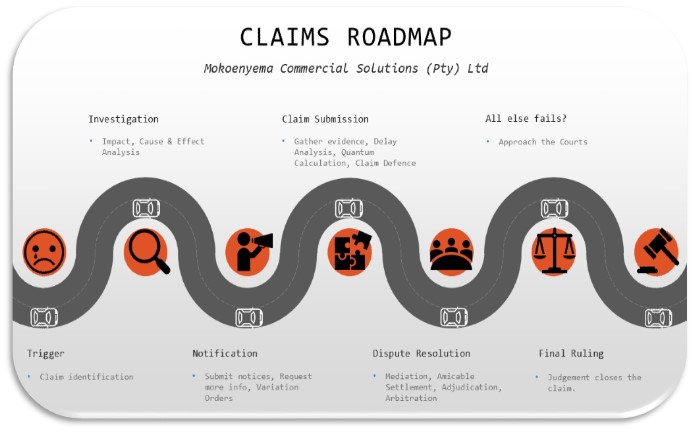
Areas of Expertise
- Contract Management
- Forensic Delay Analysis (FDA)
- Delay Analysis
- Extension of Time (EoT) Claims
- Quantum Analysis from EoT
- Contractual Variation Order Claims
- Training on Project Control and Contracts management.
- Cost Control, Budgeting and Revenues
- Create and Maintain CCMS (Commercial and Contractual Management System) Control Centre
Contract Management:
Review & Draft New Contracts and Analyzing hidden Risks.
Advice and audit the existing contract to asses prevent the damages.
Training the Project Team to make them aware of Contractual rights in all disciplines viz engineering, quality, procurement, project control, operations and maintenance.
Prepare formal Notification of Scope changes with reference to the contract clauses, Impact analysis and Cause & Effect Analysis during contract Execution.
Maintain of Change order Logs / Control, Drafting Contractual letters and Claims management.
Implementation of SCL Protocol (Society of Construction law)
Reference of International Contracts and FIDIC standards.
Delay Analysis:
Construction schedule delays and disruptions can lead to a series of cost overruns and are a frequent source of disputes between owners, contractors, subcontractors, and design professionals. A construction delay can occur if the work or a portion of the work starts or is completed later than planned. Understanding the root causes of the delay is critical to apportioning responsibility and navigating a successful resolution.
Whether it’s out of your control or not, construction projects are often subject to events that result in delays. These could occur for various reasons, from weather to poor planning. Regardless of the reasons, construction delays can have severe financial impacts on projects. Missing progress on a critical activity by just one day can put the project off schedule and cost money.
Analysts use forensic delay analysis to identify the cause of delay and the impact it had on the project. Once established, a claim can be filed if necessary to recover the damages from the delay. Multiple methods can be used to analyse delay. Selecting the right one depends on numerous factors including contractual requirements, source data availability, size and complexity of the dispute, and the forum for the dispute resolution process.
Forensic Delay Analysis (FDA):
Forensic delay analysis is the process of determining how the project schedule was impacted by one or more events that occurred during the project, as well as the causes and responsibility for those events. A delay analysis report will typically describe:
1. The quantification of overall delay;
2. Identification of the specific activities that resulted in the schedule delay;
3. Definition of the events or causes for the impacts to those activities; and
4. Assessment of the responsibility for impacts and associated allocation of project delay.
Contractors will use this type of analysis to request a time extension for events or impacts that were beyond their control or to seek reimbursement of costs due to the prolongation of work. Owners typically use this analysis to respond to contractors’ requests or to support assessment of liquidated damages for delays in being able to utilize the facilities when planned. In either situation, a detailed analysis is required to explain how the delays came about and the assignment of responsibility.
Common Causes of Delays:
There are many common causes for construction delays that could necessitate a forensic delay analysis. Here are a few examples:
• Unforeseen site conditions: Subsurface or other unanticipated conditions either not disclosed or unknown at the time of bid.
• Contractor issues: A contractor might not adequately plan the work, provide insufficient workers, provide poor quality workmanship, have safety issues, or fall short in other ways that result in the project not progressing as planned.
• Owner impacts: An owner can impact the contractor’s performance depending on its actions or inactions. An owner may make a large number of changes throughout the project, constrain access to areas when the contractor needs it, fail to provide approvals in a timely manner, or impact the contractor’s ability to perform in other ways.
• Weather impacts: A common reason for impacts is weather-related incidents. From excessive rain or snow to floods, ice, or droughts, these conditions often make it difficult or impossible to complete construction work on time. Weather conditions can have productivity impacts and/or make it unsafe to work onsite, resulting in significant impacts.
• Other reasons outside of control: The construction site might also face impacts because of situations outside the contractor’s or owner’s control. These could include manufacturers losing funding, labour strikes, labour shortages, or other similar issues.
Types of Delay Analysis
There are multiple methods of delay analysis. AACE International, the Society of Construction Law, and other industry groups have each outlined various methods for performing schedule delay analyses. The selection of methodology depends on numerous factors including contractual requirements, source data availability, dispute complexity, and the purpose of the analysis. Here is a brief summary of the five most frequently used methods and how they work.
1. IMPACTED AS-PLANNED
The impacted as-planned method models delay events through the insertion of impact activities into the original baseline (as-planned) schedule. These impact activities (e.g., “delay fragnets”) are developed to model actual events that occurred during the course of a project and their relationship to the planned activities. With the impacts inserted into the schedule, it can then be rerun using scheduling software to determine how the events impacted the project completion date.
One can then compare the as-planned completion date to the impacted completion date to quantify the days of delay attributable to the delay events.
This methodology is relatively simple to perform and understand and does not require contemporaneous schedule updates or an as-built schedule. However, it is hypothetical in nature and ignores the shifting critical path during the course of the project.
2. COLLAPSED AS-BUILT (“BUT-FOR”)
The collapsed as-built method is in some respects the opposite of the impacted as-planned method. The as-built schedule is analysed, and a determination is made as to what the completion date would have been “but-for” identified impacts.
In order to do this, you remove the impacts from the final as-built schedule and then rerun the schedule using software. The calculated difference between this modelled completion date and the actual completion date provides a quantification of the associated delay.
This method is easy to use and understand and does not require an as-planned schedule or contemporaneous schedule updates. However, it can be manipulated depending on the sequence and logic of activity deletions. Furthermore, due to being modelled in nature, a purely theoretical “but-for” schedule is determined which may or may not bear any relation to how the contractor actually executed the work during the project.
3. AS-PLANNED VS. AS-BUILT
The as-planned vs. as-built method is relatively straightforward in nature and unlike the methods discussed thus far, is purely observational in nature. A sequential comparison is made between individual planned and actual activities. In performing this comparison, you identify the causes for variances (late starts, extended durations) observed and use this to quantify associated delay.
This method has advantages as it is typically quick to complete the analysis, can be easy to understand, and can be performed with very rudimentary schedules. This method is most effective on simple projects with short durations and a critical path that remained consistent throughout the project. It can be difficult to account for a changing critical path during construction and thus accuracy diminishes in such a situation.
4. TIME IMPACT ANALYSIS (TIA)
The (retrospective) time impact analysis is a modelled approach that quantifies each impact event based on the most recently accepted schedule update before and after the delay event is inserted. The difference in project completion date between the non-impacted and impacted schedule update provides a determination of the amount of delay.
This approach is not unlike the prospective time impact analysis that might be performed during the course of the project to support a time extension request. The primary difference is that this is instead performed forensically and incorporates the actual durations of impacts.
The time impact analysis method is frequently cited in contractual provisions and can be more familiar to the parties involved. It requires consistent, reliable data for each impact, so you can’t use the method if this information is not available. However, it is considered hypothetical in nature and can be overwhelming to perform if there are numerous delay events.
5. WINDOWS ANALYSIS
The windows analysis method divides the total project duration into shorter analysis periods (“windows”) and quantifies delay within each of those periods. It is observational in nature, comparing the planned work at the beginning of the period to the as-built work during the period. The duration of each period typically varies between one and six months with allocations of delay determined for each period by measuring activity late starts and extended durations.
A major difference between a windows analysis and an as-planned vs. as-built analysis is that the windows analysis considers the dynamic nature of the critical path (through the analysis of the schedule updates). Thus, this method requires reliable periodic updates of the schedule for calculation. While the windows analysis method is extremely thorough, it can also very time-consuming and requires detailed project records.